The Invisible "Choking Toxin" Silently Destroying American Lungs — And Why Your Inhaler Is Powerless Against It
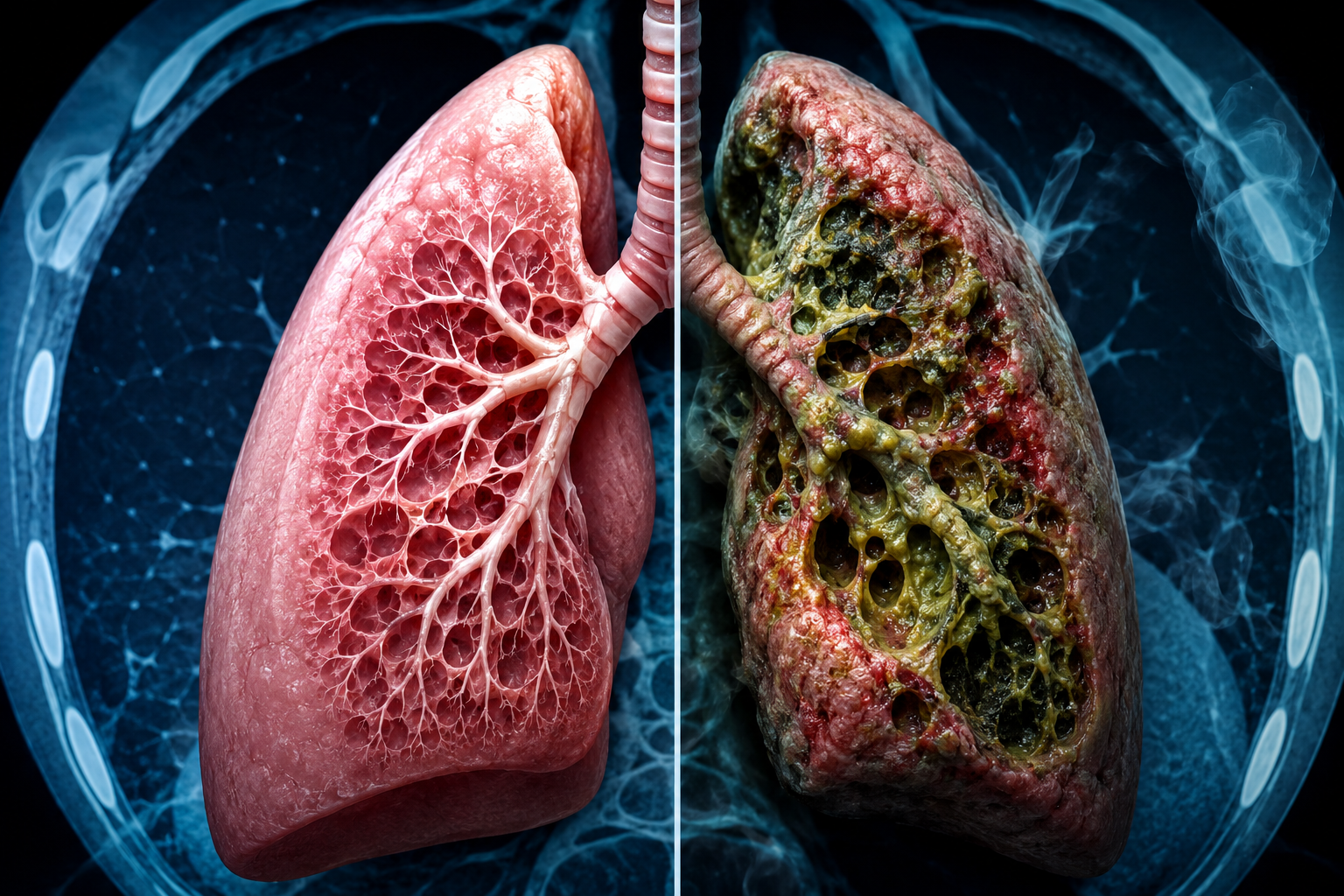
If you have COPD, emphysema, or chronic asthma and your inhalers aren't working — if you stop to catch your breath climbing stairs, lose your wind mid-conversation, or wake up coughing up thick mucus every morning — there is a reason your doctor has almost certainly never mentioned.
A landmark study analyzing over 3,500 lung scans has exposed a completely overlooked biological threat that is silently destroying the lung tissue of millions of Americans — including people who have never smoked a single cigarette in their lives.
Coughing up thick, sticky mucus every morning… running out of breath tying your shoes… stopping halfway up the stairs to rest… the humiliation of losing your breath in the middle of a conversation… waking up in a panic because the air won't come… and the quiet fear that one day, you'll end up dependent on an oxygen tank for the rest of your life.
The Discovery Turning Pulmonology Upside Down
When researchers at the University of Oxford analyzed lung scans from men and women aged 50 to 90 — healthy individuals and patients with advanced COPD — they expected to find the usual suspects: genetics, age, smoking history. What they found instead was something no one had anticipated.
Every single COPD, emphysema, and chronic asthma patient — without a single exception — shared one specific characteristic that the healthy individuals simply did not have: severely damaged alveoli corroded in a precise, identifiable pattern. Something was attacking the lung tissue from the inside out. And here is what shocked researchers most:
Many of the worst cases had never touched a cigarette. Meanwhile, some of the healthiest lungs in the study belonged to people who had smoked for decades. Something far bigger was at work.
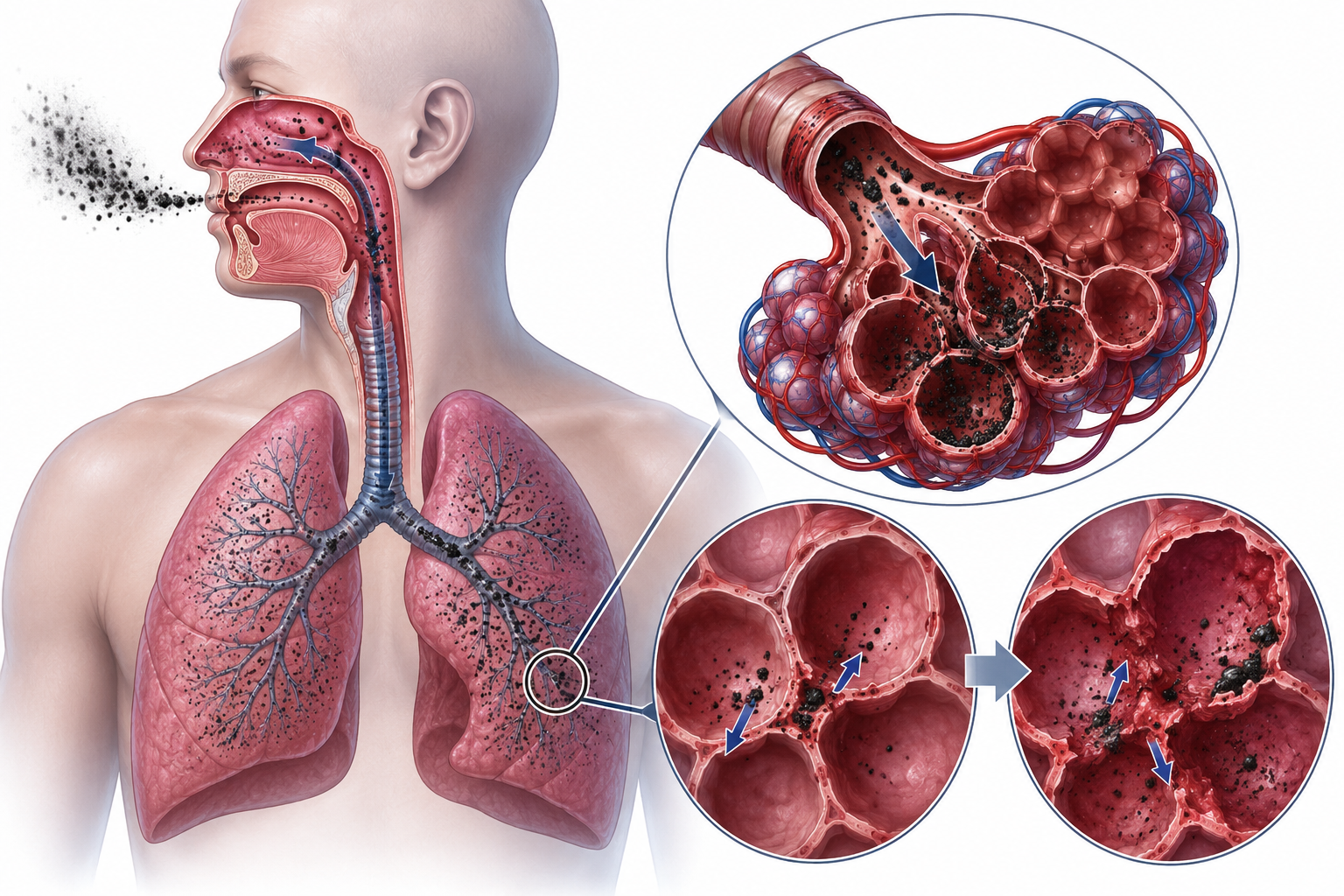
The culprit is what scientists at the American Lung Association now call the "choking toxin" — a form of catalytic carbon released by burning gasoline, coal, plastics, and synthetic fuels. Up until 30 years ago, this toxin was found almost exclusively in cigarette smoke. Today, according to the EPA, 99% of Americans are exposed to it daily — the equivalent of smoking 100 cigarettes a day — through air pollution alone.
What Happens When You Finally Eliminate the Root Cause
Independent researchers studying a remote fishing community in the South Pacific — the island of Kitava — made a finding that stunned the respiratory science world. Despite smoking strong, unfiltered herbal pipes daily since their early teens, Kitava's fishermen showed virtually zero rates of COPD or respiratory disease. Many of their elderly, well into their 80s and 90s, still practice free-diving to depths of 30 meters — holding their breath for up to 15 minutes underwater.
The answer turned out to be a simple daily ritual: every morning before dawn, the fishermen burned a dried plant with large velvety leaves — mullein leaf — and applied a paste of crushed eucalyptus leaves to their chest and back. Laboratory analysis revealed why this worked at the cellular level.
Mullein leaf contains two specific compounds — saponins and mucilage — that bind directly to catalytic carbon lodged inside the alveoli and expel it through mucus. Eucalyptus, applied to the chest, dilates the airways and allows damaged lung tissue to regenerate — something previously considered impossible by conventional medicine.
When these compounds were isolated, concentrated, and combined with four additional clinically studied ingredients, researchers found they worked in three distinct biological phases:

A free educational video presentation has just been released that walks you through exactly how this 3-phase natural lung recovery protocol works — including the precise ingredients, where they come from, and real accounts from people who used it to achieve breathing results their pulmonologists couldn't explain.
This is not another generic supplement ad. Not another breathing exercise. Not another false promise. It is a science-backed biological explanation for why COPD and chronic respiratory problems have been so difficult to resolve — and a step-by-step look at what it actually takes to address them at the root.